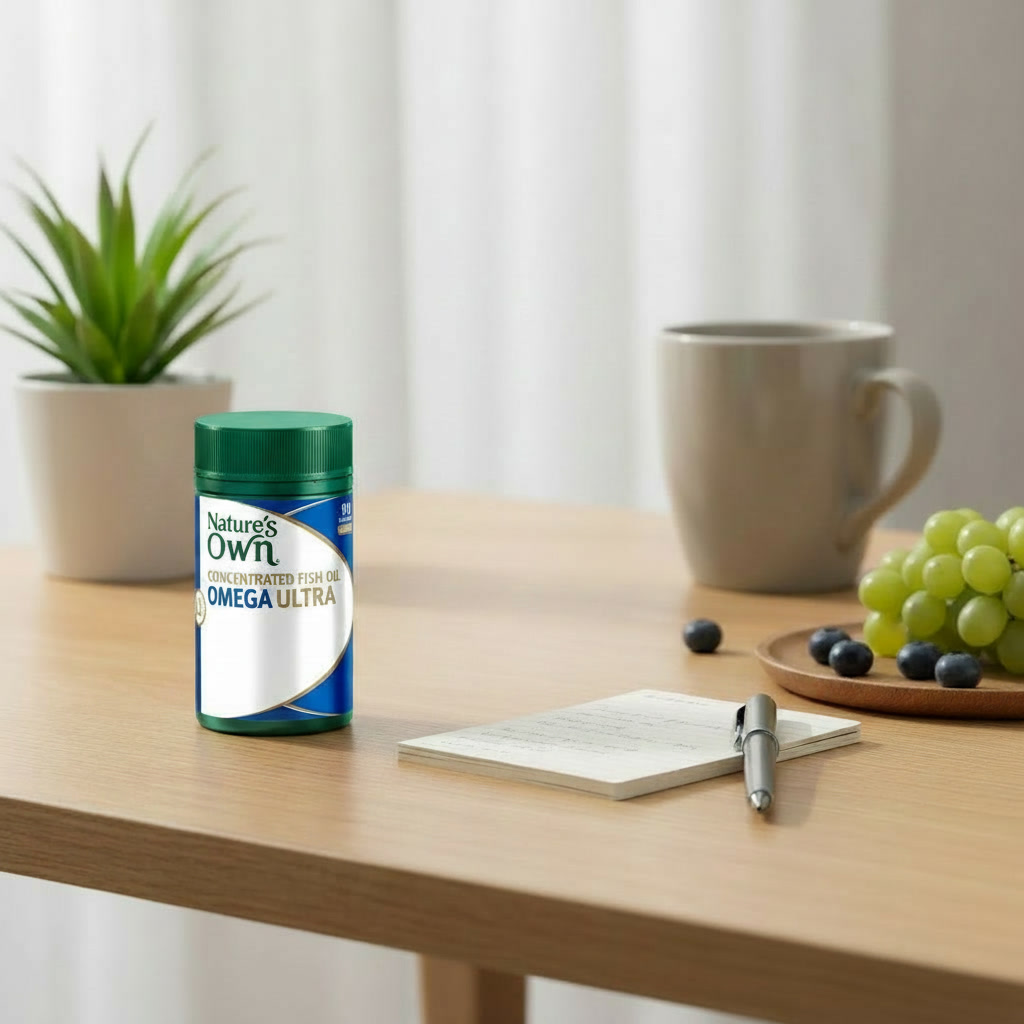
What’s the Best Time to Take Fish Oil?
In this article
There is no single perfect time of day to take fish oil. For most people, the best time is the time they are most likely to take it consistently, while following the directions on the product label.[5][6] Fish oil supplements can be one way to add omega-3s to your routine, but they should complement, not replace, a balanced diet.[1][2][3]
Quick Answer
If you are wondering when to take fish oil, the most practical answer is: take it at a time you can remember, and follow the label directions.[5][6] Some people prefer taking it with breakfast, while others find lunch or dinner easier. The key is consistency, not finding a supposedly perfect hour of the day.[5][6]
What Is Fish Oil?
Fish oil is a source of omega-3 fatty acids. Fish and seafood can provide omega-3s as part of a healthy diet, and Australian dietary guidance notes that fish, especially oily fish such as salmon and tuna, can be a valuable source of essential omega-3 fatty acids.[1][2][3][4] Fish oil supplements are commonly used by people who want an additional source of omega-3s as part of their daily routine.[5][6]
Is There a Best Time to Take Fish Oil?
There is no universal best time that suits everyone.[5][6] Morning can work well for people who already take supplements with breakfast, while others may prefer dinner because it fits more naturally into their routine. The more useful question is not “What is the perfect time?” but “When am I most likely to remember to take it?”[5][6]
That is why routine matters so much. A simple habit you can stick to is usually more helpful than trying to optimise the exact time of day.
Should You Take Fish Oil With Food?
A practical approach is to follow the directions on the specific product and take it in a way that fits comfortably into your routine.[5][6] Many people find it easier to remember supplements when they take them with a meal, because it becomes part of an existing daily habit.[6]
Morning or Night: What Works Best?
Both can work. Morning may suit people who like taking supplements with breakfast, while evening may suit those who find dinner easier to remember.[6]
A simple way to choose is to ask:
- When am I most likely to remember?
- What do the product directions say?
- Does it fit naturally into my daily routine?
Timing Table
| Option | When it may suit | Key consideration |
|---|---|---|
| Morning | If you already take supplements at breakfast | Easy to build into an existing routine |
| Lunch | If lunch is your most regular meal | Useful if mornings are rushed |
| Evening | If dinner is your most consistent routine | Easy to remember for some people |
| Any time | If you follow the label and stay consistent | Routine matters more than perfection |
How to Make Fish Oil Part of Your Routine
The easiest way to remember fish oil is to connect it to something you already do every day. That might be breakfast, lunch, dinner or another regular part of your schedule. Keeping the product somewhere visible at home or setting a reminder can also help make the habit easier to maintain.
This kind of advice may sound simple, but it is often the most useful. A routine you actually follow is better than a highly specific plan you forget after a few days.
Can Fish Oil Replace Eating Fish?
No. Fish oil supplements should not replace a healthy diet.[1][2][3] Australian dietary guidance supports eating a variety of nutritious foods, and fish can be part of that healthy eating pattern. The Australian Dietary Guidelines summary specifically notes that fish, especially oily fish such as salmon and tuna, can be a valuable source of essential omega-3 fatty acids.[1][2]
When Should You Speak With a Healthcare Professional?
If you are unsure whether fish oil is right for you, or you are not sure how to use a particular product, it is a good idea to speak with a healthcare professional.[5][6] This is especially helpful if you want advice that is specific to your own health needs or routine.
Final Thoughts
There is no single best time of day to take fish oil for everyone. The best time is the one that fits your routine, helps you stay consistent and aligns with the directions on the label.[5][6] Fish oil can be one part of a healthy supplement routine, but it should sit alongside a balanced diet and broader healthy lifestyle habits, not replace them.[1][2][3]
References
- Eat for Health, Australian dietary guidelines 1–5
Link: https://www.eatforhealth.gov.au/guidelines/australian-dietary-guidelines-1-5 - Eat for Health, Australian dietary guidelines summary
Link: https://www.eatforhealth.gov.au/sites/default/files/files/the_guidelines/n55a_australian_dietary_guidelines_summary_130530.pdf - Better Health Channel, Fish
Link: https://www.betterhealth.vic.gov.au/health/healthyliving/fish - Better Health Channel, Dietary fat
Link: https://www.betterhealth.vic.gov.au/health/healthyliving/dietary-fat - Therapeutic Goods Administration, Listed medicines
Link: https://www.tga.gov.au/products/medicines/listed-medicines - Healthdirect, Fish oil
Link: https://www.healthdirect.gov.au/medicines/medicinal-product/aht,22259/fish-oil
